Loading

From the idea to a product people use

A working MVP is the first credible release of your custom SaaS.

The aim is to put a complete core workflow in the hands of real users so you can learn. Account creation, business value, data, security and operation already need to work together. Additional features belong in the roadmap until their value has been established.

Which projects benefit from custom SaaS or MVP development?

MVP

Validate a new product

Turn an idea into a usable first release that tests the value proposition with users and the market.

  • Priority workflow and success criteria
  • UX prototype followed by a working application
  • User feedback and evidence-based decisions
SaaS

Launch a custom B2B platform

Build an online service for customer organisations and their users, with operational requirements considered from the start.

  • Accounts, roles and customer workspaces
  • Plans, subscriptions and payments
  • Administration and operational support
UP

Take over an existing SaaS

Stabilise an initial release, clarify its architecture or prepare the next stage while assessing what can be retained.

  • Code and infrastructure review
  • Prioritised technical debt and security work
  • Progressive product development

A scope that tests a clear hypothesis

Define the smallest product that is actually useful.

The MVP keeps the workflow needed to test the main product hypothesis. Helpful but non-essential features stay in the roadmap to protect budget and timescale while retaining sound technical foundations. The team agrees what constitutes a successful first use before development starts.

Looking to improve a process used only by your own team? The custom business software service is a better starting point for that need.

  • A verifiable problemA precise difficulty experienced by identified users.
  • A core workflowThe action that delivers the product’s essential value.
  • Explicit hypothesesWhat the first release needs to help you learn.
  • Useful indicatorsActivation, usage, conversion or retention, according to the business model.
  • Documented limitsDeferred features and clearly recorded decisions.
  • A prepared next stepA foundation that can support improvements confirmed by usage.

The technical foundations of an operable custom SaaS.

ID

Accounts & organisations

Authentication, invitations, roles, permissions and data separation appropriate to users and customer organisations.

UX

Onboarding & product journeys

A clear introduction to the product’s value, with understandable states and consistent actions throughout the core workflow.

PAY

Plans & subscriptions

Plans, trials, payments, invoicing and access rules aligned with the chosen commercial model and the agreed scope.

API

Data & integrations

Data models, APIs, imports, exports and connections to the services needed by the priority workflow.

OPS

Deployment & observation

Environments, backups, logs, error reporting and indicators that make day-to-day operation observable.

SEC

Security & privacy

Least-privilege access, protected secrets, traceability and data handling considered during discovery.

Progress through verifiable releases

From discovery to launch, then informed product decisions.

Each stage produces something the team can review before committing to the next one.

  1. DiscoverUsers, problem, market, constraints and expected outcome.
  2. PrototypeJourneys, screens and essential rules reviewed before full development.
  3. Build the MVPCustom application, data, accounts, security, tests and production release.
  4. Measure & improveFeedback, usage observations and a roadmap prioritised from real evidence.

Custom web products designed and used in real operations.

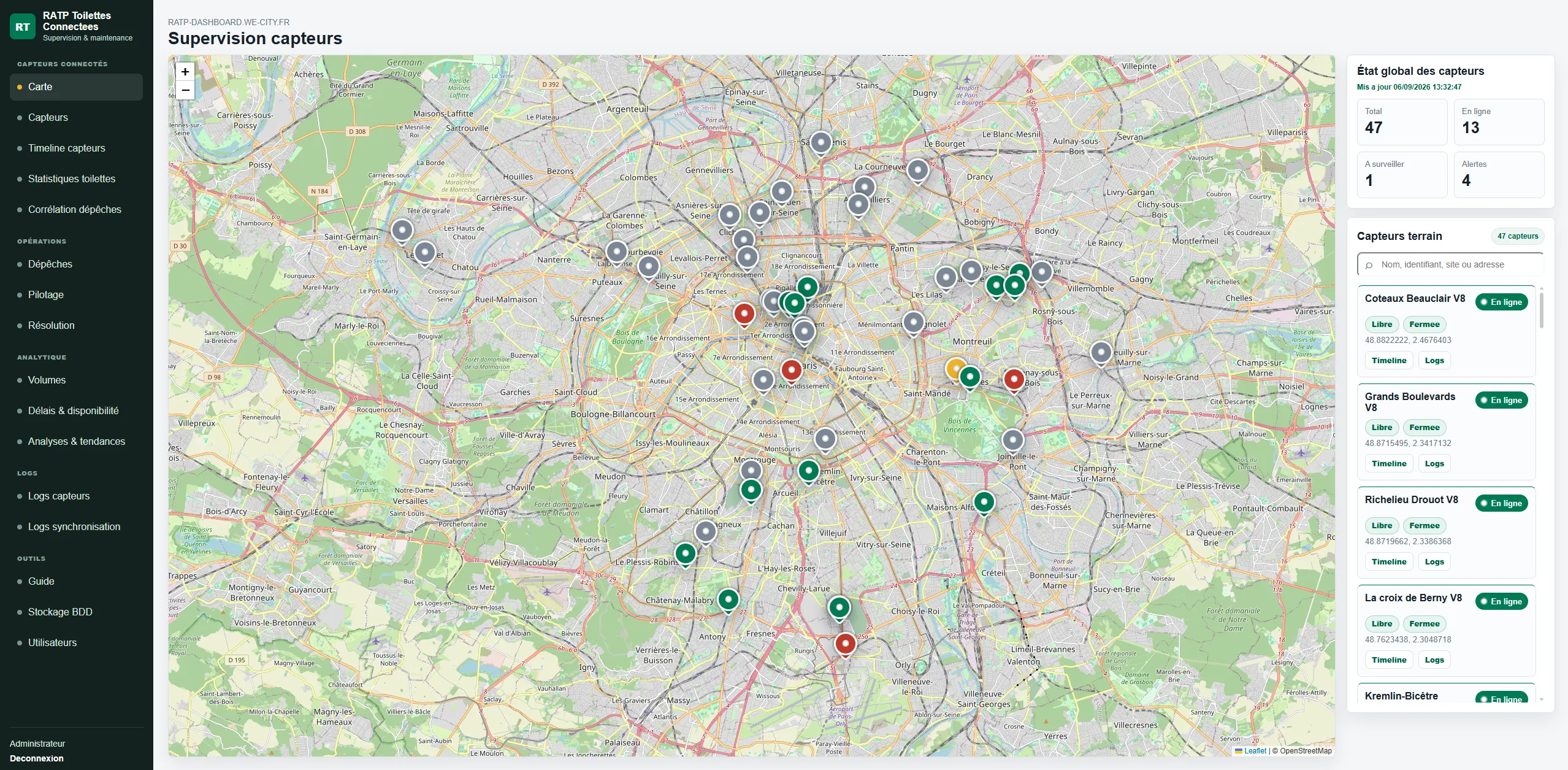
The map brings together the equipment fleet, current statuses and items requiring attention.

Custom B2B application

RATP Toilettes Connectées

An IoT supervision platform connecting equipment, operational incident reports, commands and resolution tracking.

Explore the project →

A SaaS development partner in France for European and international teams

I work remotely with product founders, SMEs and teams through discovery workshops, working demonstrations, written decisions and shared priorities. We agree review times, decision-makers and the release plan around your team’s location. Target languages, hosting preferences and market-specific integrations are identified before they affect delivery.

Development supports commercial validation; it does not replace it. The MVP lets you confront a proposed use with real feedback and choose the next improvements. Scope, budget and acceptance criteria are agreed before each stage, with external subscriptions and operating costs made explicit.

What is the difference between SaaS and business software?

Business software usually supports one organisation’s internal processes. SaaS is a product offered to multiple companies or users, with account management, plans, operations and often subscriptions. Technical foundations can overlap, but the product and commercial objectives differ.

What belongs in a custom SaaS MVP?

The workflow delivering the main value, necessary accounts and permissions, useful data, minimal administration, security, tests and ways to gather feedback. A clickable mock-up can validate a design, but a usable MVP also needs working application behaviour.

How much does SaaS or MVP development cost?

The starting point on the pricing page is €25,000 excluding VAT for a very basic SaaS. The budget depends on roles, business rules, payments, integrations, data migration and the required level of finish. Hosting, external services, maintenance and later releases are scoped separately.

How long does a first release take?

The current indicative range is three to six months for a professional MVP, including discovery, design, development, testing and production release. More complex requirements, content preparation or external approvals can extend that timescale; the project plan follows the agreed scope.

Can you take over an existing MVP?

Yes, after reviewing code, data, access, infrastructure and dependencies. That review identifies what can be kept, stabilised or rebuilt before a realistic delivery scope is confirmed.

Source code, data and handover conditions

Code access and ownership

The agreement defines intellectual property, third-party components and code handover conditions. Repository access, documentation and operational access are planned to support continuity and future maintenance of the product.

Data and hosting

Personal data, access rights, backups and external services are reviewed during discovery. European hosting can be selected according to project needs, suppliers and budget; data location is an explicit architecture decision.

After launch

Usage observations, incidents and user feedback guide the roadmap. Maintenance, monitoring and new features are distinguished so commitments and recurring costs remain clear.

Need technical leadership beyond the MVP?

My work as CTO at Groupe WE informs architecture and delivery decisions. Technical support can complement development: roadmap prioritisation, cost and maintainability trade-offs, security, integrations and technical debt, in coordination with your own team and suppliers.

The role and time commitment are agreed with your team. The aim is to maintain continuity between product decisions, operational constraints and the ability to deliver the next useful release, with written decisions that remain accessible across time zones.

Related case studies

Intervention schedule: teams, time slots and direct access to job records.Business software

Idea to Software

A business ERP connecting jobs, constraint-based scheduling, stock, invoicing and a customer extranet, with ITS Report for video inspection.

Read the case study →
The map brings together the equipment fleet, current statuses and items requiring attention.Supervision

RATP Toilettes Connectées

An IoT supervision platform connecting equipment, operational incident reports, commands and resolution tracking.

Read the case study →

A custom SaaS or MVP to define?

Describe the problem, target users, validation already completed, planned features and deadline. We can define a coherent first product for your European or international market, with direct technical contact from France.